
Home › Engineering Support › Custom Car Parking Systems Guide
Modern architectural projects rarely conform to textbook specifications. Irregular floor plates, shared structural cores, constrained ceiling heights, and heritage building retrofits all demand parking solutions that go far beyond catalog selections. For architects, structural engineers, and commercial developers, selecting the right parking system is not a purchasing decision—it is an engineering challenge. This guide explains the exact parameters our engineering team addresses when designing bespoke car parking systems, and why custom engineering support is the only reliable path for complex projects.
1. Why Standard Parking Lifts Fail Complex Projects
Off-the-shelf parking lifts are engineered around median assumptions: a standard ceiling height of 3.2m, a flat and reinforced concrete floor, single-phase 220V power, and vehicles weighing under 2,000kg. The moment your project deviates from any of these parameters, a standard product becomes a liability. We have consulted on projects where clients purchased catalog equipment from competitors only to discover at installation that the platform width was 180mm too narrow for their SUV-dominant clientele, or that the power draw exceeded the building’s substation capacity by 40%. These are not minor adjustments—they are project failures that require costly redesigns. Custom engineering support is not a premium add-on; for complex projects, it is the only responsible approach.
2. The 5 Core Parameters We Engineer for Your Site
Every bespoke parking solution we deliver is built around a site-specific engineering assessment. The following five parameters form the foundation of that process.
A. Ceiling Height Adaptation
Ceiling clearance is the most critical and most frequently underestimated constraint in parking system design. The calculation is not simply “ceiling height minus vehicle height”. You must account for the structural thickness of the platform (typically 120–180mm), the travel distance of the mechanical locking pawl (a safety-critical element under EN 14010:2003+A1:2009), and the compressed height of the hydraulic cylinder at full extension. In low-headroom environments—particularly in basement retrofits and heritage buildings with exposed ceiling beams—we engineer our scissor mechanisms and cylinder mounting positions to recover up to 350mm of effective clearance compared to standard designs. For projects where the available height falls below 2.9m, we work with a pit-integrated platform solution, recessing the lower parking position into a shallow in-floor pit to preserve full drive-in headroom for both levels.
B. Platform Width & Load Capacity
The global vehicle fleet is undergoing a structural shift. The Ford F-150, the BMW X7, and the Tesla Model X—three of the best-selling vehicles in their respective markets—all exceed 2,000mm in width and 2,500kg in kerb weight. Standard platforms sized for a 1,850mm wide vehicle and rated to 2,000kg are already obsolete for North American and Northern European markets. Our engineering team sizes platforms to your specific vehicle mix. We offer custom widths from 1,800mm to 2,600mm and load ratings from 2,000kg to 5,000kg per platform. For luxury residential and premium car storage projects, we also engineer platform surface materials—from galvanized steel grating to solid checker-plate with integrated drainage channels—to meet both functional and aesthetic requirements.
C. Power Supply Customisation
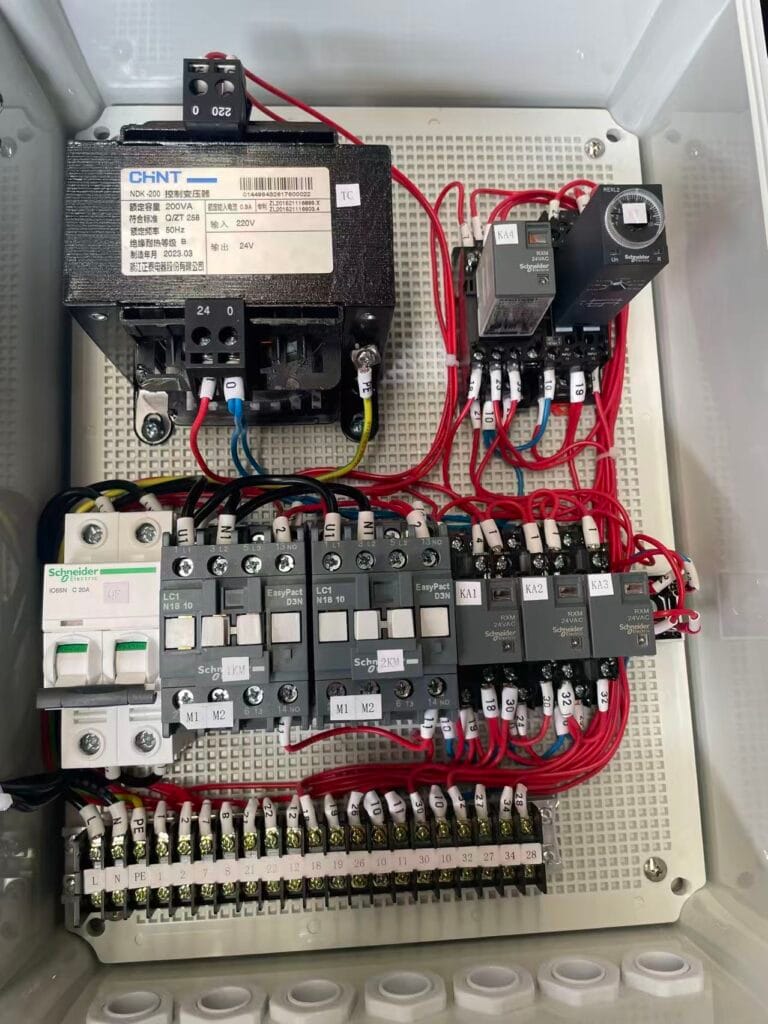
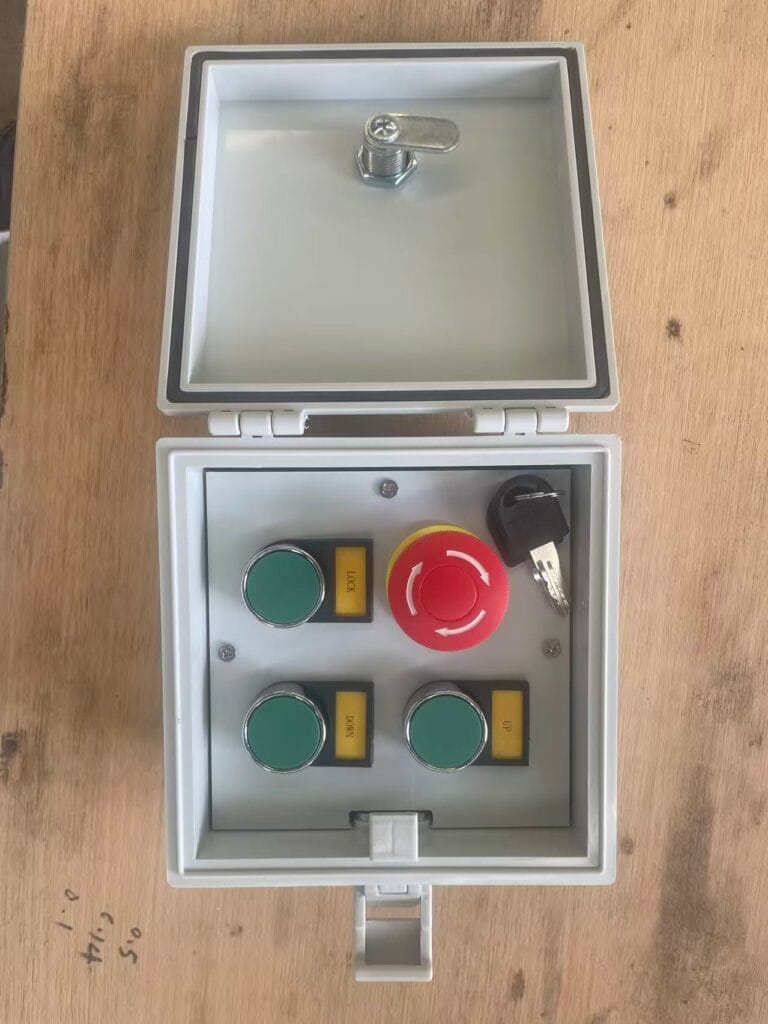
A parking lift is only as reliable as the power system driving it. Our hydraulic power units (HPU) are assembled in-house, allowing us to configure the motor, pump, and control logic to match any grid standard in the world. We routinely supply units configured for 220V single-phase (50Hz), 380V three-phase (50Hz), 208V three-phase (60Hz), and 480V three-phase (60Hz). For projects in regions with unstable grid supply—common across Southeast Asia, the Middle East, and Sub-Saharan Africa—we integrate automatic voltage stabilizers and thermal overload protection as standard. For sustainability-focused developments, our control systems support integration with solar PV inputs and time-of-use load shifting, ensuring the lifts preferentially operate during off-peak energy windows.
D. Surface Finish & Corrosion Protection
The operating environment of a parking system determines its long-term reliability far more than its nominal load rating. Coastal environments, underground car parks with poor ventilation, and open-air rooftop installations all create aggressive corrosion conditions that standard zinc phosphate primer and alkyd topcoat cannot resist beyond three to five years. For coastal and high-humidity projects, we specify a full hot-dip galvanizing process on all structural steel members, providing a minimum coating thickness of 85 microns. For premium showroom and luxury residential installations, we offer custom RAL powder coating in any specified colour, applied over a zinc-rich epoxy primer. Marine-grade stainless steel is used for all fasteners and hydraulic fittings in salt-air environments.
E. Control System & Smart Building Integration
Modern commercial and mixed-use developments demand parking systems that integrate with building management systems (BMS), access control platforms, and IoT monitoring frameworks. Our PLC-based control systems are available with BACnet, Modbus RTU, and Modbus TCP/IP communication protocols as standard, enabling full integration with leading BMS platforms including Siemens Desigo, Honeywell Enterprise Buildings Integrator, and Johnson Controls Metasys. For high-volume commercial installations, we provide a cloud-connected monitoring dashboard that tracks lift cycle counts, hydraulic fluid temperature, and motor load current in real time—enabling predictive maintenance scheduling and eliminating unplanned downtime.
3. Case Study: Solving a Low-Ceiling Retrofit Project
A residential developer in Northern Europe approached us with a structurally fixed basement ceiling at 2,730mm and a requirement to accommodate 12 additional parking spaces for a luxury apartment conversion. The existing basement column grid was on a 5,400mm x 5,400mm module, ruling out any automated puzzle or rotary system. For projects where an automated puzzle layout does fit, our Puzzle & Combi lift buyer’s guide covers drive-type comparison and layout options.
Our engineering team proposed a customised two-post mechanical stacker with the following modifications: a platform height of 95mm (versus our standard 130mm), a cylinder top-mount configuration that reduced the mechanism’s overhead requirement by 280mm, and a platform width of 2,350mm to accommodate the Porsche Cayenne and BMW X5 vehicles belonging to the building’s residents. The lower platform incorporated a 180mm in-floor recess, constructed by the main contractor to our structural loading drawings, which recovered the remaining headroom margin. The result: 12 additional parking spaces delivered within a structurally fixed envelope, with a net increase of 180mm of usable headroom versus any standard product available in the market.
4. The Engineering Consultation Process
Our process is designed to eliminate uncertainty at every stage, from initial feasibility through to installation sign-off. The four stages are as follows.
- Stage 1 – Site Data Collection: We provide a structured Site Readiness Checklist covering 22 parameters including ceiling height at each lift position, floor slab thickness and concrete compressive strength (minimum 25 MPa / C25 required per ACI standards), available electrical supply capacity, and vehicle dimensions. This document can be completed by your site surveyor in under two hours.
- Stage 2 – Preliminary Engineering & Layout Design: Within five working days of receiving completed site data, our team produces a dimensioned AutoCAD layout drawing showing lift positions, column locations, drive aisle widths, and minimum clearance zones. This drawing is provided free of charge and is suitable for inclusion in planning submissions.
- Stage 3 – Technical Specification & Compliance Review: We produce a full technical specification document covering all customised parameters, the applicable EN 14010 clauses addressed, and the required civil works (anchor bolt positions, electrical containment routes, and pit dimensions where applicable).
- Stage 4 – Installation Support & Commissioning: Our factory engineers provide remote installation guidance via video call throughout the installation process. For projects in Europe and the Middle East, on-site commissioning supervision is available on request.
5. Compliance & Certification: CE & EN 14010 Explained
EN 14010:2003+A1:2009 is the governing European standard for the safety of machinery used in power-operated parking equipment for motor vehicles. Compliance with this standard is a legal requirement for all parking lifts placed on the European market under the CE Marking Directive. The standard establishes requirements across eight domains: structural integrity, mechanical safety, hydraulic system integrity, electrical safety, control system logic (including safety circuit design), emergency lowering procedures, user information and labelling, and periodic inspection intervals.
All ShinInnovation parking systems are designed and tested to EN 14010 requirements, with CE declarations of conformity issued for each product family in compliance with the EU Machinery Directive 2006/42/EC. Our structural calculations are verified by independent structural engineers registered in the EU. For projects requiring third-party certification beyond self-declaration—common for public-sector and insurance-mandated commercial projects—we can supply systems with TÜV inspection certification upon request. Copies of all conformity documentation are provided with every shipment and are available in advance for inclusion in planning and building control submissions. Our manufacturing processes operate under an ISO 9001:2015 certified quality management system, ensuring consistent product quality across every production run.
Frequently Asked Questions
Q: What is the minimum ceiling height required for a two-post car stacker?
A: For a standard configuration accommodating two vehicles up to 1,600mm in height, the minimum ceiling clearance is 3,200mm. For our low-headroom custom configuration with a pit recess, this can be reduced to 2,850mm.
Q: Can your parking lifts be configured for left-hand traffic environments?
A: Yes. The control console position, ramp approach direction, and safety barrier configuration are all adaptable for both left-hand and right-hand traffic layouts. We supply projects in the UK, Australia, Japan, and South Africa regularly.
Q: What concrete slab thickness is required for installation?
A: A minimum slab thickness of 150mm with a compressive strength of 25 MPa (C25) is required. For thinner existing slabs, we provide through-bolt anchor assemblies or base plate solutions. Our team will specify the appropriate solution based on your structural engineer’s slab data.
Q: How long does a custom engineering project take from inquiry to delivery?
A: The standard lead time is 35–45 working days from receipt of signed technical confirmation and deposit. Preliminary layout drawings are provided within five working days of receiving site data, at no cost and with no obligation.
Q: Do you provide CAD files for inclusion in architectural drawings?
A: Yes. 2D AutoCAD (.dwg) layout and elevation drawings are provided as standard. 3D Revit (.rvt) and SketchUp (.skp) models are available for our standard product range upon request.
Ready to Discuss Your Project?
Send us your site drawings or answer our 22-point checklist. Our lead engineer will respond with a free preliminary layout within 5 working days.
Found this engineering guide helpful?
Share it with your professional network on LinkedIn to help others optimize their parking projects.
Share on LinkedIn