
A car stacker should be selected around vehicle retrieval, not simply the number of parking spaces shown in a drawing. For a commercial garage, the useful comparison between a two-post parking lift and a four-post parking lift is whether each configuration fits the vehicles, site and operating routine. Neither column count alone nor a higher capacity rating settles that decision.
This checklist focuses on platform-based simple parking equipment for parking and storage, rather than arm-type workshop service lifts. It gives property managers a practical way to compare quotations without assuming that every car stacker has the same installation requirements.
1. Match the Car Stacker to the Retrieval Routine
Start with a vehicle movement plan. For a typical above-ground dependent stacker, the lower vehicle must leave before the upper vehicle can be lowered. Ask who holds the keys, where the displaced vehicle waits and whether staff will operate the equipment.
A layout used for occasional vehicle storage may not suit a garage with frequent, overlapping departures. Compare the complete retrieval sequence, not just the advertised lifting time. Include approach space, driver exit, clearing the lower bay and returning vehicles to their assigned positions.
2. Compare Two-Post and Four-Post Layouts
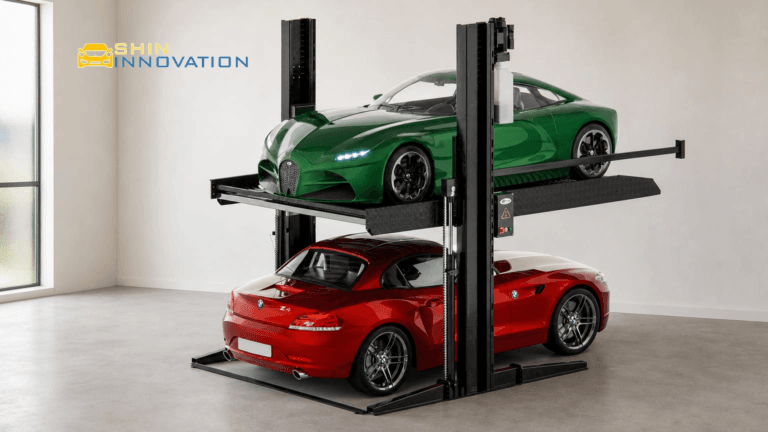
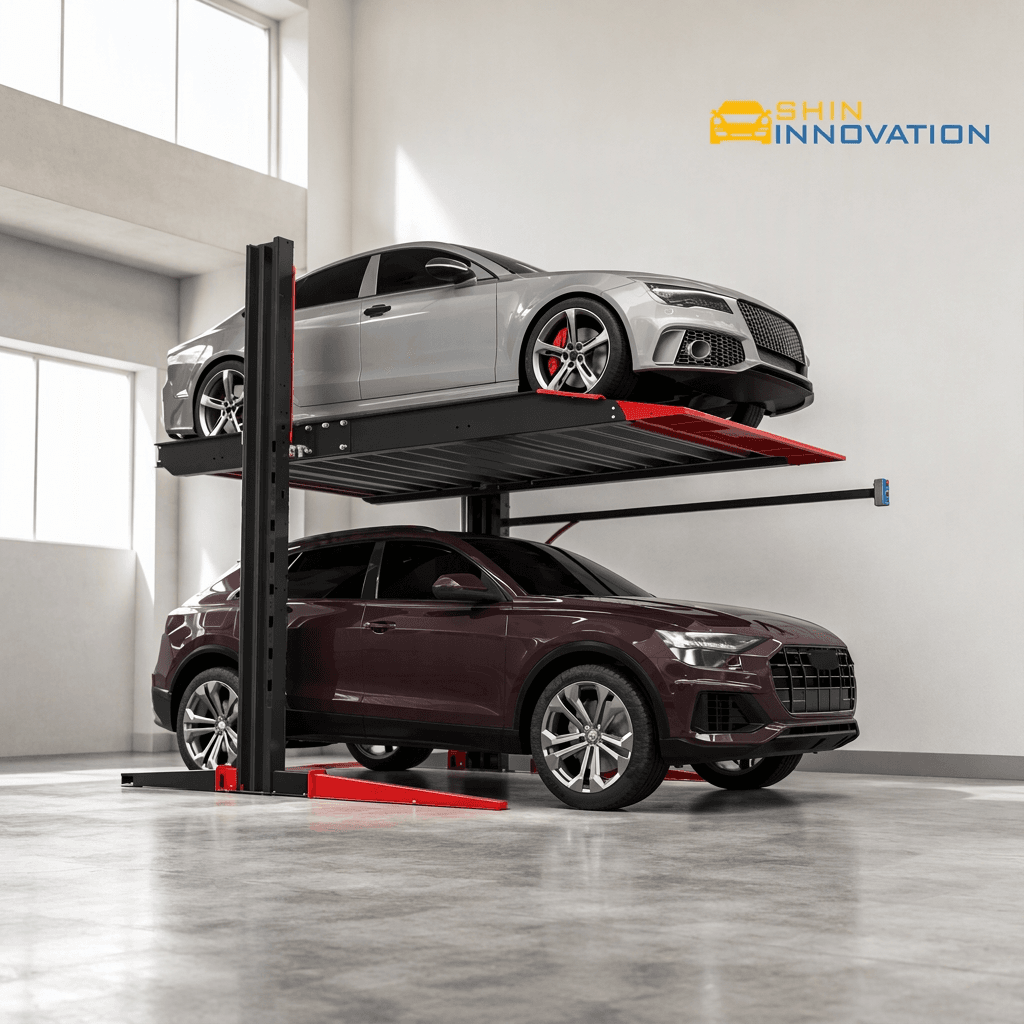
A two-post parking lift supports a parking platform using two columns; some systems permit shared columns between adjacent units. SHININNOVATION’s PTP two-post parking lift range describes shared-post configurations. Request the complete connected layout rather than multiplying one unit’s dimensions by the required bay count.
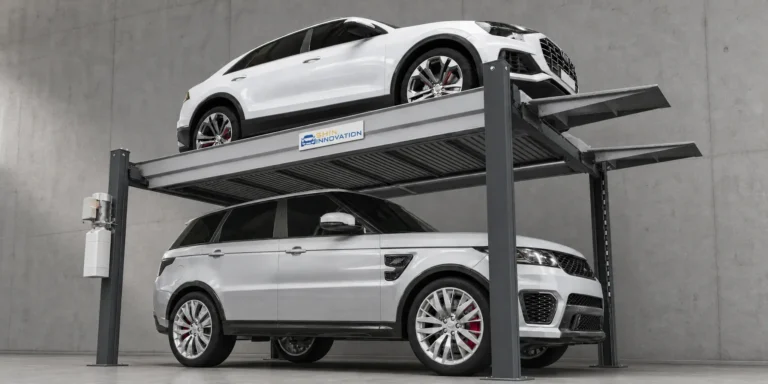
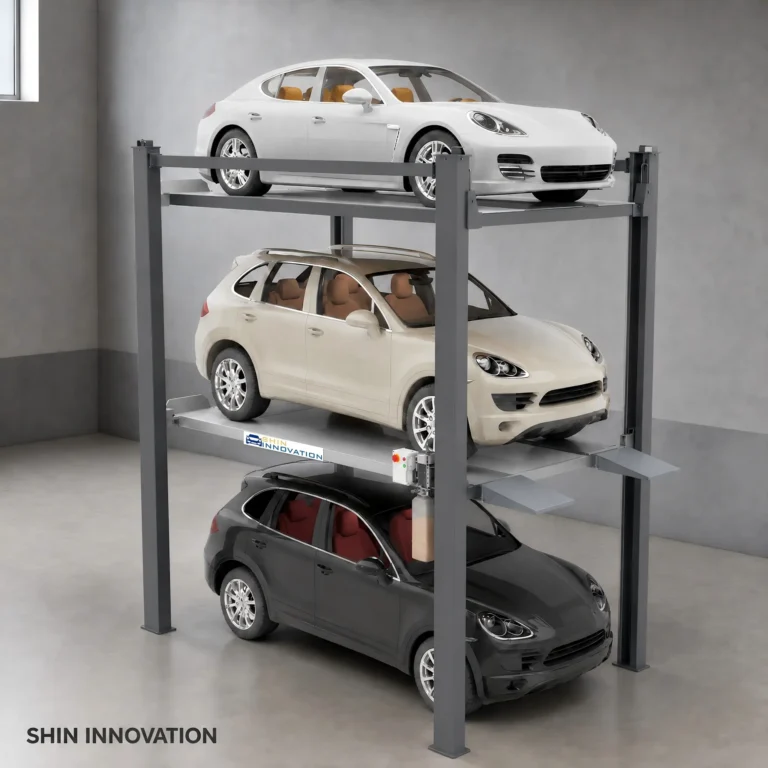
A four-post parking lift supports its lifting arrangement at four column positions. The PFPS four-post car parking lift range uses hydraulic cylinders with steel ropes and sheaves. Compare column locations, ramps, runways and door-opening space against the actual vehicles. Do not assume either format automatically provides easier access or greater suitability for every garage.
3. Check the Vehicle Envelope, Not Just Weight
Published specifications show why model-level comparison matters. The PTP range lists rated capacities from 2,000 to 3,000 kg, while the PFPS page lists 2,700 kg and 3,600 kg versions. These are specific product ratings, not universal limits for all two-post or four-post equipment.
Check vehicle length, width, height, wheelbase and ground clearance alongside weight. Ask for the permitted vehicle envelope and platform arrangement for the quoted model. A vehicle being below the weight limit does not confirm that its body, wheels or roof accessories will fit.
4. Resolve Site Requirements Before Comparing Prices
Measure overhead beams, pipes, lights and door tracks throughout the operating area. Required room height depends on both vehicles, platform geometry and movement; lifting height is not a substitute for a clearance drawing. There is no single ceiling-height figure appropriate to every car stacker.
Likewise, do not assume a four-post lift can use an existing floor without assessment. Obtain model-specific foundation and anchoring drawings, and have the project engineer review the slab and installation. Confirm the electrical supply with the installer. Request an itemized quotation covering equipment, delivery, building work, installation, commissioning and maintenance.
5. Request Safety Documents and an Operating Plan
Ask which locks, controls, warning devices and emergency procedures apply to the selected configuration. Establish operator training, inspection responsibilities and a maintenance schedule before handover. For background, the Automotive Lift Institute’s standards-development page distinguishes construction, installation and operational standards and lists a separate vehicle-storage parking-lift standards project.
This reference does not certify any product or determine which standard applies locally. Request documentation for the exact model and confirm applicable requirements with the project professionals and relevant authority.
Build a Comparable Car Stacker Shortlist
Review the simple parking system range, then shortlist a two-post and a four-post option using the same vehicle mix and retrieval assumptions. Record any differences in usable space, site work and staffing needs before judging the purchase price.
For a site-specific proposal, send SHININNOVATION your layout and vehicle requirements. Include garage measurements, vehicle details, operating hours and expected departure patterns so the proposed car stacker can be assessed against the way your parking facility will actually work.