
How a Parking Lift Helps Small Garages Add Safer Vehicle Capacity
For many homeowners, repair shops, car storage facilities, and compact commercial properties, the biggest parking problem is not always land availability. It is how to use the space that already exists. A parking lift offers a practical way to add vehicle capacity in a garage or workshop without starting a major construction project.
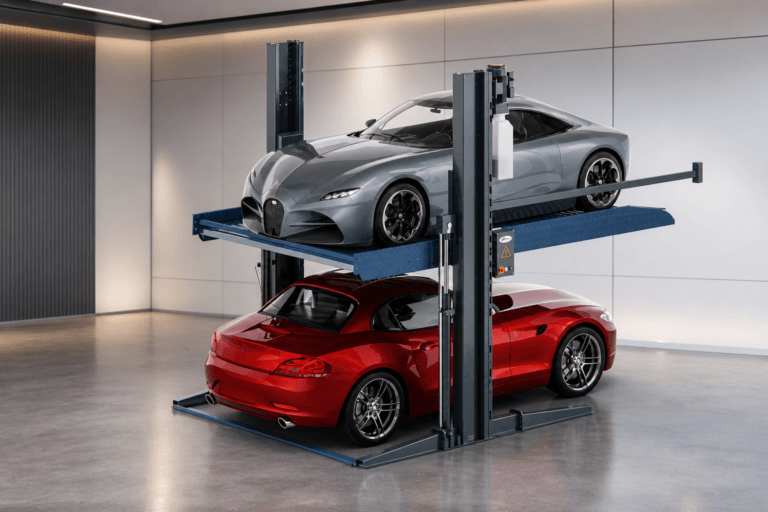
Unlike large automated parking systems, simple parking equipment such as a two-post parking lift, four-post parking lift, or car stacker is designed for direct, space-saving vehicle storage. One car can be raised on a platform while another vehicle remains below, turning a single parking footprint into a more efficient vertical storage area.
This is why parking lifts are increasingly considered by small garages, residential projects, auto service shops, and commercial vehicle storage operators. The goal is straightforward: add capacity while keeping the site layout simple, accessible, and easier to manage.
Why Parking Lifts Fit Compact Garage Projects
A parking lift can be especially useful when a property has enough ceiling height but limited floor space. Instead of expanding the building, the equipment makes use of vertical space. For small garages, this may mean storing a second vehicle above the first. For workshops or commercial properties, it may help separate stored cars from daily-use vehicles.
Urban planning resources such as the NACTO Urban Street Design Guide emphasize how limited street and land space must be designed carefully. While that guide focuses on streets, the same principle applies to parking areas: space should be used deliberately, not wasted.
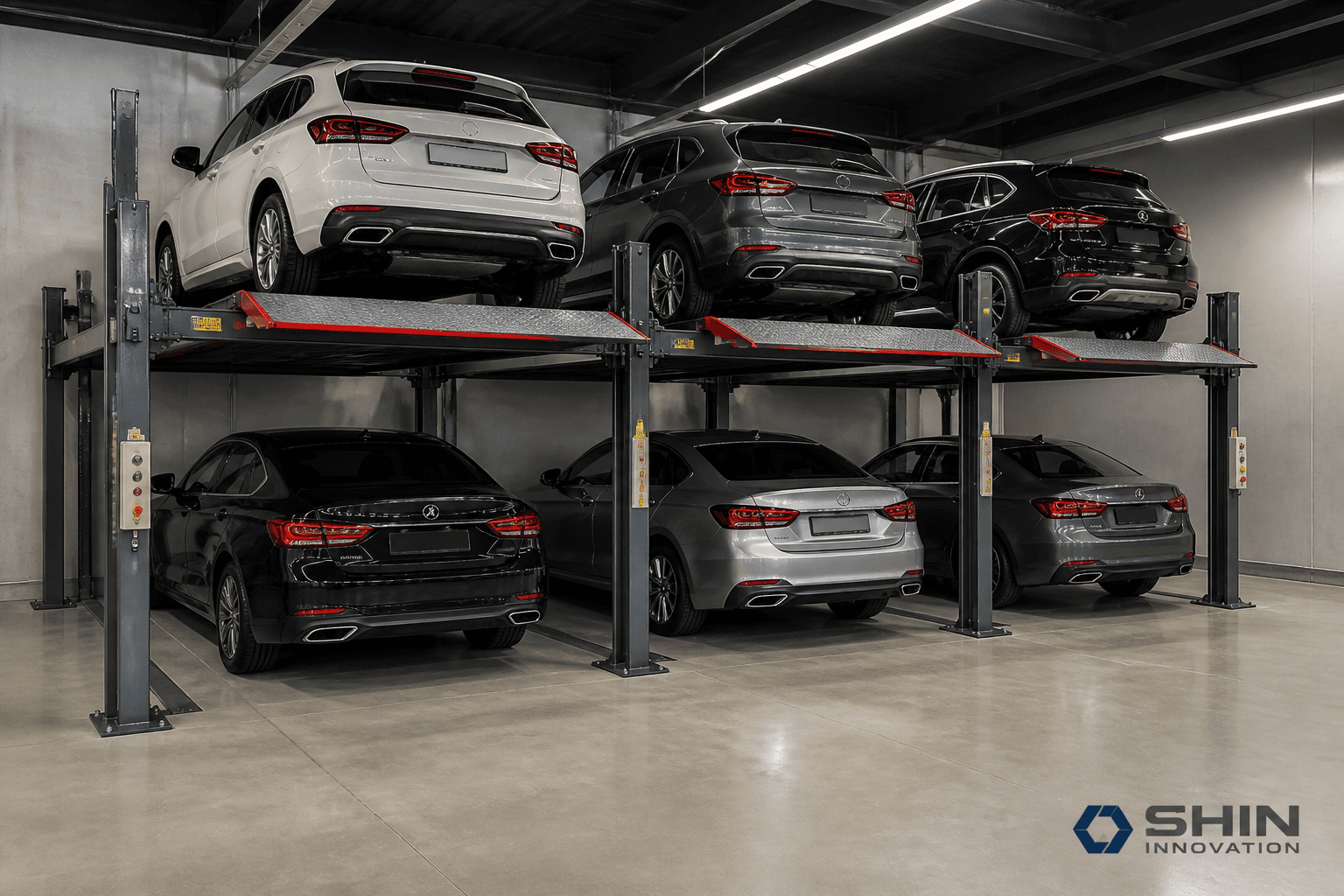
A simple car stacker can also support better organization. Vehicles can be assigned to defined spaces, stored above ground level, and kept away from crowded drive aisles. For many projects, this is easier to plan than a full structural expansion.
What Buyers Should Check Before Choosing a Parking Lift
Before choosing a parking lift, buyers should evaluate several practical conditions. The first is clear height. The garage must have enough vertical clearance for the raised platform, the upper vehicle, and safe movement. The second is floor strength. A qualified engineer or installer should confirm whether the floor can support the equipment, vehicle load, and anchor requirements.
Buyers should also consider vehicle type, platform size, access direction, power supply, and daily operation frequency. A home garage may need a different configuration from a repair shop or commercial storage facility.
Planning resources from the U.S. EPA Smart Growth program highlight the importance of efficient land use and practical development patterns. For parking projects, simple equipment can be one way to support better space utilization without expanding the site footprint.
Safety and Maintenance Matter
A parking lift should not be selected only by price or capacity. Safety features, locking systems, platform stability, maintenance access, and installation quality are critical. Operators should follow the manufacturer’s operating instructions and schedule regular inspections.
For commercial projects, it is also helpful to review broader parking industry resources from organizations such as the International Parking & Mobility Institute. These resources can help property owners think beyond equipment selection and consider operations, maintenance, and long-term parking management.
When a Parking Lift Is the Right Choice
A parking lift is a strong option when the project needs more vehicle capacity but does not require a fully automated system. It is especially suitable for small garages, residential parking upgrades, auto service facilities, vehicle storage businesses, and compact commercial properties.
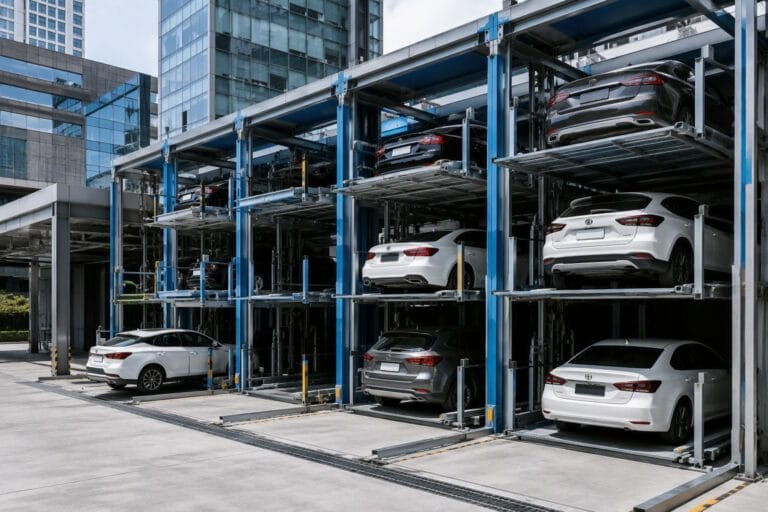
The best result comes from matching the equipment type to the site conditions. A two-post parking lift may work well for simple vertical stacking. A four-post parking lift can be useful when broader platform support is preferred. A car stacker may fit projects where storage density is the main goal.
For property owners comparing simple parking equipment, the right starting point is a clear site assessment: available height, floor strength, vehicle dimensions, daily usage, and safety requirements. With the right planning, a parking lift can help add practical vehicle capacity without major construction.
FAQ
What is a parking lift?
A parking lift is mechanical parking equipment that raises one vehicle so another vehicle can be stored below or nearby, helping increase vehicle capacity within a limited footprint.
Is a parking lift suitable for a small garage?
Yes, a parking lift can be suitable for a small garage if the ceiling height, floor strength, vehicle size, and access space meet the equipment requirements.
What is the difference between a parking lift and a car stacker?
A parking lift is a broad term for equipment that raises vehicles, while a car stacker usually refers to a lift system designed specifically to store cars vertically in stacked positions.
Does a parking lift require major construction?
Many simple parking lift projects require proper anchoring and installation, but they may avoid the scale of construction needed for a building expansion or fully automated parking system.
What should buyers check before installing a parking lift?
Buyers should check ceiling height, floor load capacity, vehicle dimensions, platform size, safety locks, power supply, local requirements, and maintenance access.