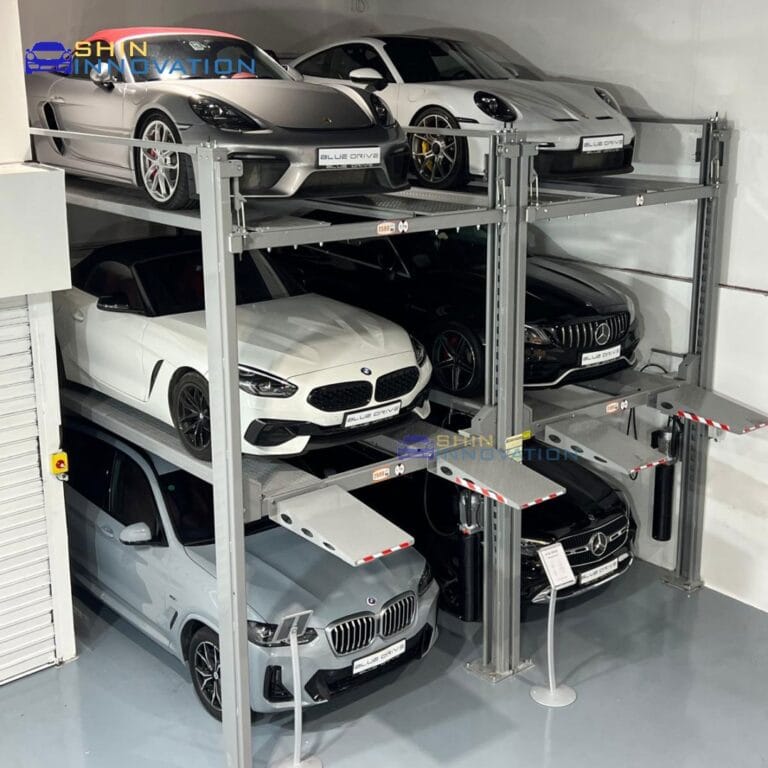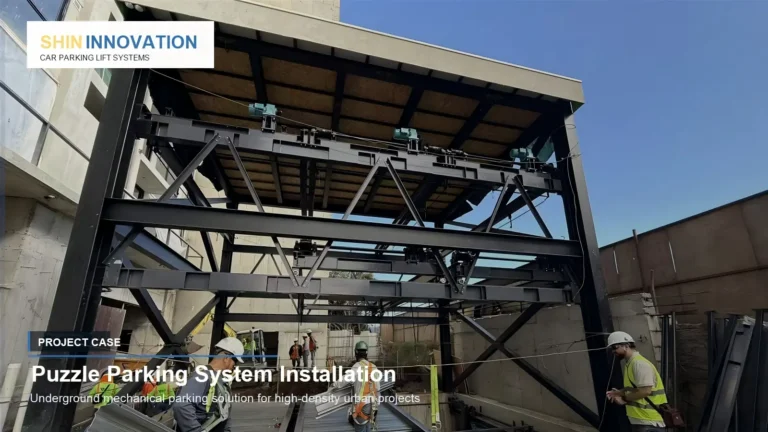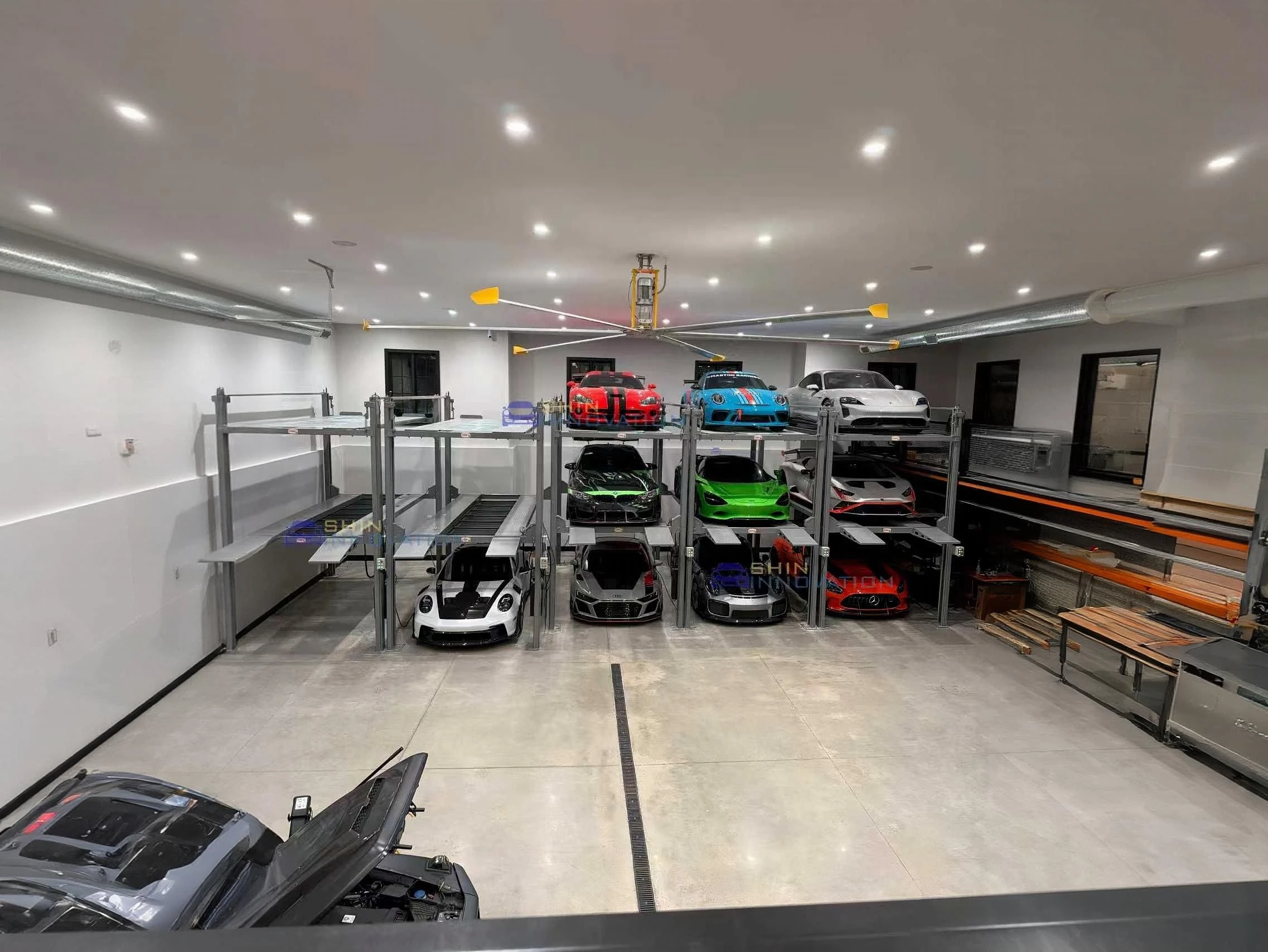

As urban density increases and the average household car ownership grows, the standard two-car garage is rapidly becoming insufficient for modern needs. Homeowners often find themselves choosing between parking a valuable vehicle on the driveway—exposed to the elements—or embarking on a costly, time-consuming structural renovation. However, there is a third, more efficient path: the double car parking lift. This piece of precision engineering allows you to double your parking capacity without expanding your garage’s footprint, providing a pragmatic solution to a complex spatial problem.
For manufacturers like Qingdao Shin innovation tech co ltd, the goal is not just to sell equipment, but to provide a vertical spatial solution that integrates seamlessly into a residential environment. In this guide, we will explore the technical nuances, installation requirements, and the long-term ROI of integrating a home garage parking lift into your property.
The Engineering Logic of a Double Car Parking Lift
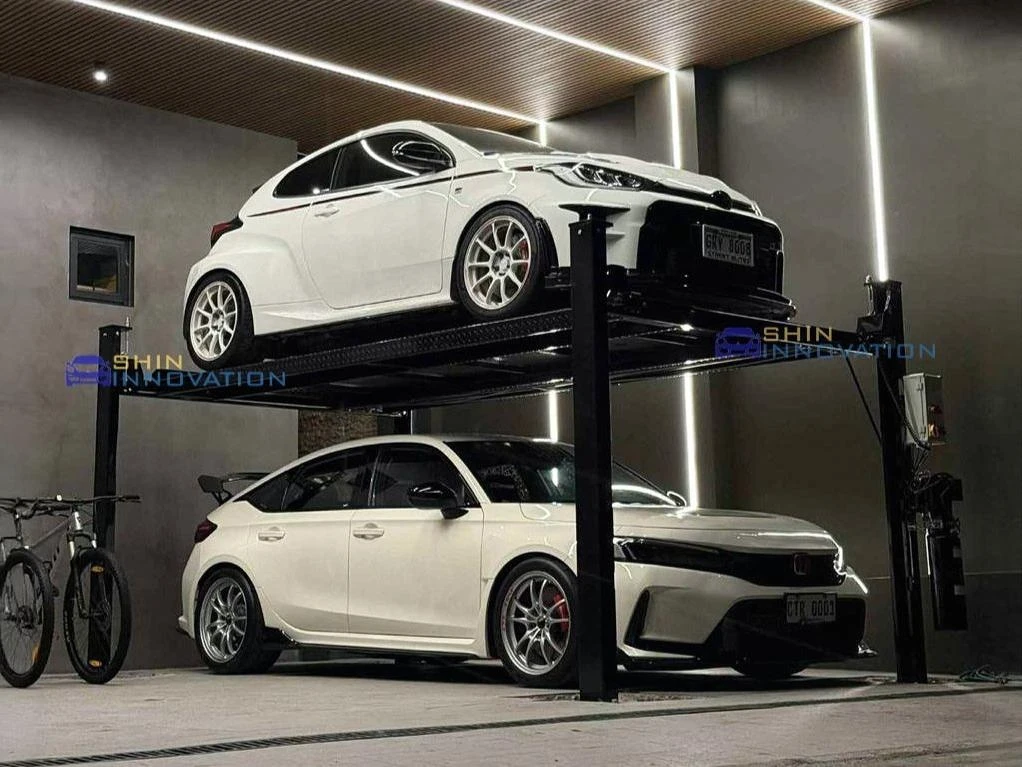
At its core, a double car parking lift—also frequently referred to as a stacker lift—operates on a simple yet robust principle: utilizing the vertical air space in your garage that typically goes to waste. Most modern residential garage lifts use a hydraulic-driven system supported by heavy-duty steel chains or cables — and the choice of chain vs wire-rope drive affects maintenance and noise. The hydraulic cylinder provides the lifting force, while the synchronization mechanism ensures that the platform remains perfectly level during ascent and descent.
There are two primary types of residential lifts: the four-post lift and the two-post lift. The four-post configuration is the industry standard for home storage. It provides maximum stability and can often be used as a service lift for light maintenance. The two car parking lift in a four-post design distributes the weight across four corner columns, which reduces the point-load stress on your garage floor. This is a critical factor for homeowners who may not have reinforced concrete slabs.
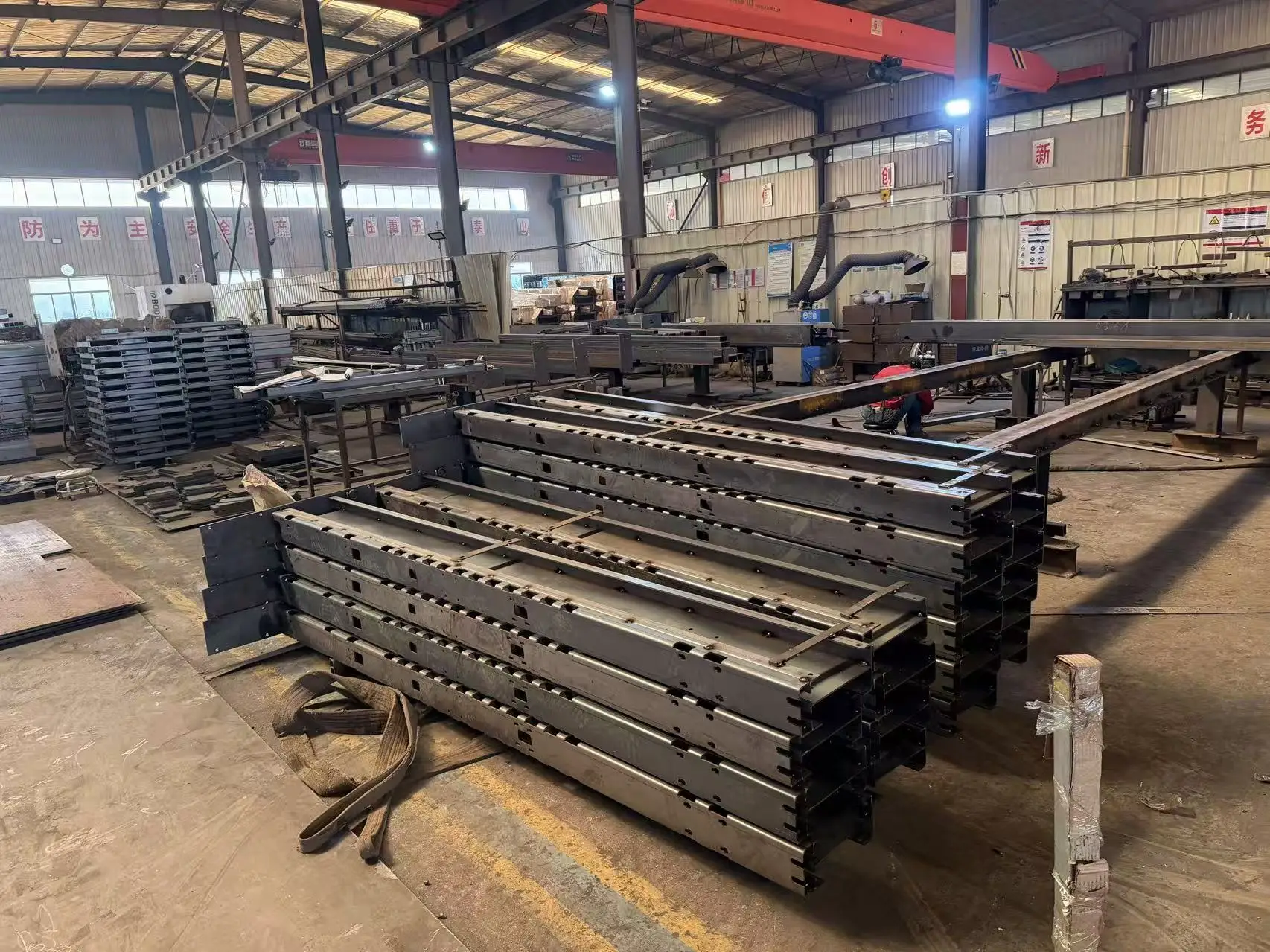
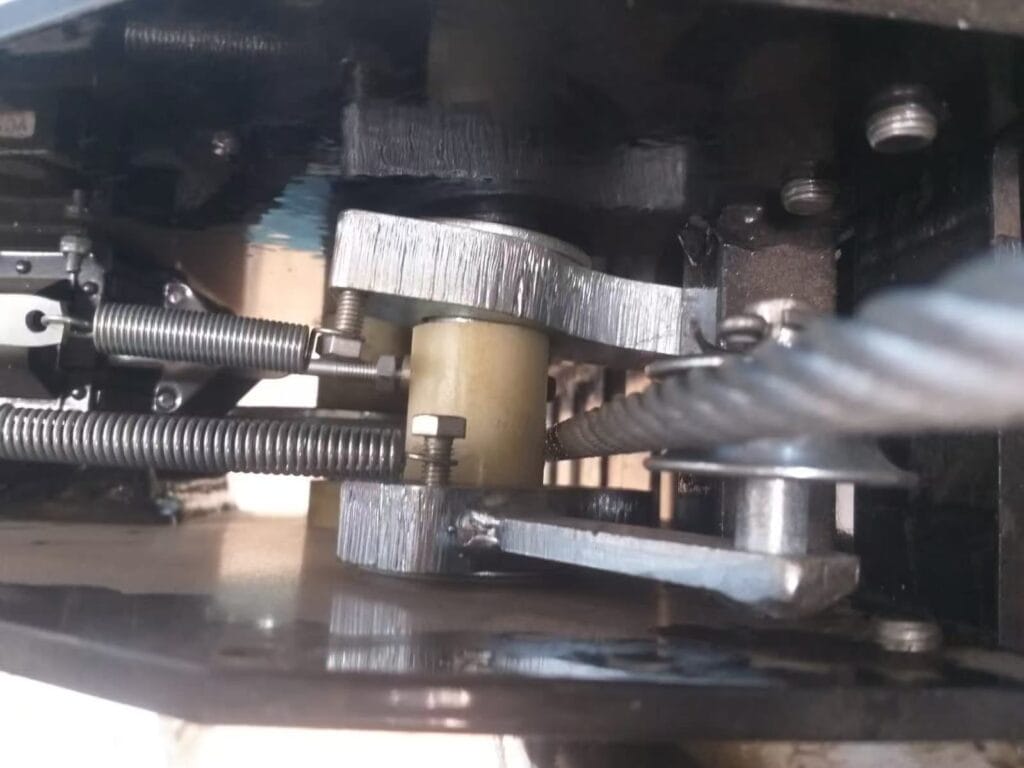
Precision manufacturing is what separates a professional-grade lift from entry-level alternatives. From the laser-cut steel used in the columns to the quality of the hydraulic valves, every component must be designed to withstand years of daily use. For a manufacturer like Shin Innovation, safety is paramount, which is why multi-position locking systems are standard, ensuring that even in the unlikely event of a hydraulic failure, the vehicle remains securely suspended.
The Strategic Benefits of a Residential Parking Lift
Implementing a residential parking lift is a strategic investment that extends beyond mere convenience. Here are the primary advantages considered by property owners and developers:
1. Maximum Spatial Efficiency: The most obvious benefit is the ability to park two vehicles in the space of one. For collectors or families with multiple drivers, this eliminates the “car shuffle” every morning. By lifting one vehicle, you free up the ground level for a daily driver, a workshop, or additional storage.
2. Enhanced Vehicle Protection: Parking a car outdoors subjects it to UV damage, bird droppings, tree sap, and temperature fluctuations. A car kept on a lift inside a climate-controlled garage maintains its paint quality and mechanical integrity for much longer. Furthermore, a car suspended six feet in the air is virtually impossible to steal, providing an added layer of security.
3. Property Value Appreciation: In real estate markets where parking is at a premium, a garage equipped with a high-quality lift is a significant selling point. It transforms a standard property into a “car enthusiast’s home,” often yielding a return on investment that far exceeds the initial cost of the equipment.
4. Versatility for Maintenance: While primarily designed for parking, many four-post double car parking lifts can be used for light DIY maintenance. If you are an enthusiast who enjoys changing your own oil or inspecting the undercarriage of your vehicle, the lift provides the necessary clearance to work safely and comfortably.
Comparing the Alternatives: Lift vs. Construction
When faced with a lack of space, homeowners often compare the cost of a parking lift with the cost of a traditional garage extension. The data below highlights why mechanical solutions are increasingly favored in residential settings.
| Comparison Metric | Double Car Parking Lift | Traditional Garage Expansion |
|---|---|---|
| Required Footprint | Approx. 15-20 sq. meters (existing) | 30-40+ sq. meters (new land) |
| Typical Project Cost | $2,500 – $6,500 | $15,000 – $45,000+ |
| Installation/Construction Time | 1 – 2 Days | 4 – 10 Weeks |
| Permitting Requirements | None to Minimal (Equipment) | Significant (Structural/Zoning) |
| Flexibility/Portability | Can be moved or sold | Permanent fixture |
As the table demonstrates, a home garage parking lift offers a far more cost-effective and less intrusive way to gain space. While construction involves contractors, dust, and months of disruption, a lift can be operational within 48 hours of delivery.
Critical Specifications: Is Your Garage Ready?
Before purchasing a two car parking lift, you must conduct a thorough audit of your garage’s dimensions and utilities. Not every garage is a candidate for a lift, and forcing an installation in an unsuitable space can lead to safety hazards.
Ceiling Height Requirements: This is the single most important variable. To park two cars, you need to calculate the height of Car A + the height of Car B + the thickness of the lift platform (approx. 4-5 inches) + a safety buffer (6 inches). For two standard sedans, a minimum ceiling height of 10 to 11 feet is usually required. For SUVs, you may need 12 feet or more.
Floor Integrity: Most residential lifts require a concrete slab with a minimum thickness of 4 inches and a strength of at least 3,000 PSI. If your garage floor has significant cracking or is made of asphalt, you may need to pour concrete pads specifically for the lift’s posts.
Electrical Supply: Most double car parking lifts operate on 110V or 220V power. While some can run on a standard household outlet, we recommend a dedicated 20-amp circuit to ensure the motor doesn’t trip breakers during heavy lifting. 220V motors are generally preferred for their efficiency and faster lifting speeds.
Door Opener Interference: Standard garage door openers often hang in the middle of the ceiling exactly where the upper car needs to be. You may need to replace your traditional trolley-style opener with a “jackshaft” opener that mounts on the side wall to clear the vertical space.
Safety Standards and Operational Best Practices
A residential parking lift is a heavy-duty machine. While modern units are incredibly safe, operator error is the most common cause of incidents. To ensure a safe environment, follow these expert-level protocols:
Always engage the mechanical locks. Never leave a car suspended solely by hydraulic pressure. Once the lift reaches the desired height, lower it slightly onto the locking ladders. This removes the stress from the hydraulic system and ensures the platform cannot move.
Be mindful of weight distribution. Ensure the vehicle is centered on the platform. A heavily front-weighted or rear-weighted vehicle can cause the lift to “lean,” putting unnecessary torque on the columns. Most lifts have adjustable “stops” to help you position the car perfectly every time.
Implement a “no-go zone” during operation. Ensure children and pets are well away from the lift when it is in motion. Modern lifts from reputable manufacturers like Shin Car Lift include safety features such as slack-cable detectors and emergency stop buttons, but vigilant operation is the best safety tool.
The Importance of Professional Maintenance
To maintain the longevity of your double car parking lift, a regular maintenance schedule is non-negotiable. While these machines are built for durability, they do have wear components that require attention.
Monthly checks should include inspecting the lifting cables or chains for fraying or signs of stress. You should also check the hydraulic fluid levels and look for any weeping or leaks around the seals. Annually, the pulleys and columns should be lubricated with a high-quality lithium grease to ensure smooth movement and prevent corrosion.
If you live in a coastal area with high salt content in the air, or if you park a car that brings in road salt during winter, cleaning the lift is essential. Salt is the enemy of steel and can lead to premature rusting of the structure if not managed properly.
Frequently Asked Questions About Double Car Parking Lifts
Below are common inquiries we receive from homeowners regarding the installation and use of parking lifts.
Q: Can a parking lift be installed on an unlevel floor?
A: Lifts can handle minor slopes for drainage (standard in most garages), but significant unevenness requires shimming or a new concrete pour to ensure the columns are perfectly vertical.
Q: Is it difficult to move the lift if I relocate?
A: No. Unlike a garage expansion, a four-post lift is technically “portable.” It can be disassembled and moved to a new home by a professional team in a few hours.
Q: Will my car drip oil onto the car parked below?
A: Most quality residential parking lifts come with drip trays—plastic or metal inserts that sit between the runways to catch any fluids from the upper vehicle, protecting the car below.
Maximize Your Space Today
Our engineering team is ready to help you design the perfect parking solution for your home.
GET ENGINEERING SUPPORTFound this engineering guide helpful?
Share it with your professional network on LinkedIn to help others optimize their parking projects.
Share on LinkedInAll specifications referenced in this guide align with internationally recognised standards: EN 1493 (European vehicle lift safety standard), ANSI/ALI ALCTV (North American equivalent published by the Automotive Lift Institute), and ISO 9001 quality management certification. Manufacturers holding CE Marking have demonstrated compliance with EU Machinery Directive requirements through third-party conformity assessment.